
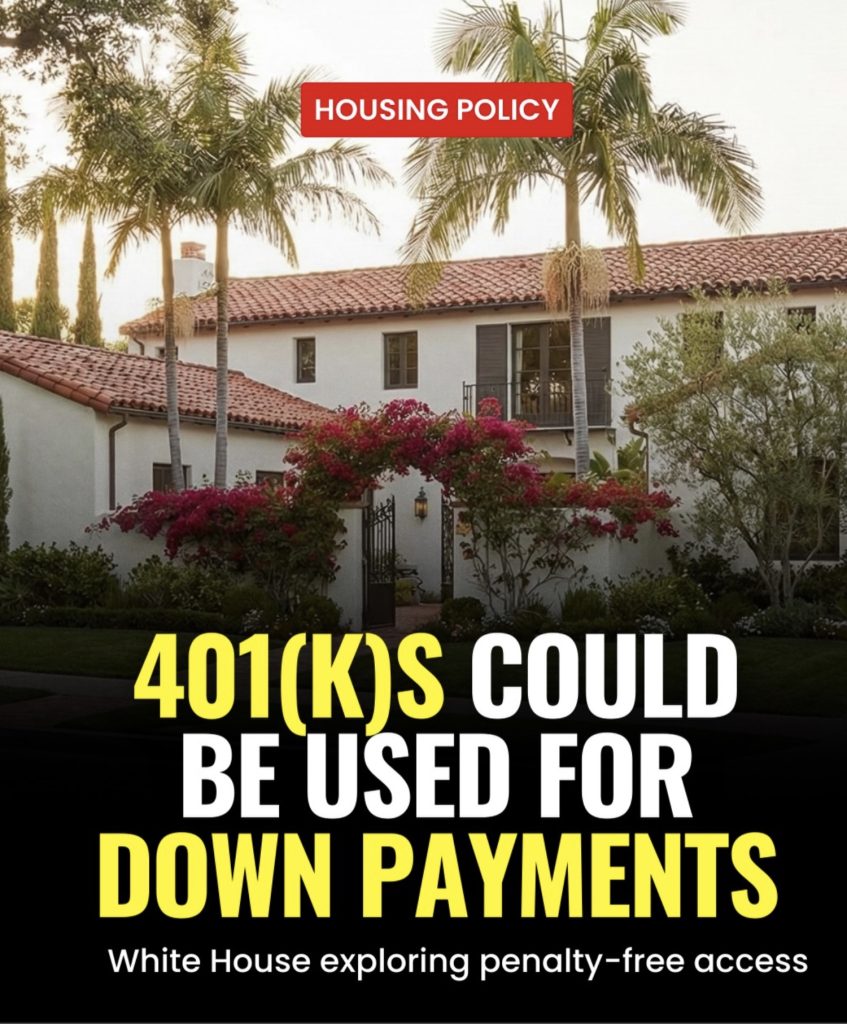
The White House Is Reportedly Exploring 401(k) and 529 Funds for Down Payments. Here’s Why It Matters.
There’s a housing policy conversation happening right now that could change the way buyers approach down payments in the coming years.
According to reports, the White House is exploring the idea of allowing Americans to use 401(k) or 529 funds toward a down payment without the usual penalties. This is being discussed as part of a broader strategy to help improve housing affordability.
It’s not official policy yet, and nothing has passed into law. But it’s worth paying attention to, because it signals a potential shift in how affordability solutions are being approached.
What’s Being Discussed
The idea is simple on the surface:
Buyers may be allowed to tap into existing savings vehicles like:
- 401(k) retirement accounts
- 529 education savings plans
And use those funds for a home down payment without the standard penalty structure.
If implemented, it could reduce the biggest barrier many buyers face today. Not the monthly payment, but the upfront cash needed to get into a home.
Why This Could Be a Big Deal
Many buyers are in a frustrating position right now.
They have stable jobs.
They’ve built good credit.
They can afford the payment.
But between home prices, rates, and the cost of living, saving a down payment is what keeps them stuck.
This type of policy would be aimed directly at that problem: unlocking capital that already exists, instead of requiring buyers to save even more.
The 50 Year Mortgage Getting Shelved Is Also a Signal
At the same time these conversations are happening, the idea of 50 year mortgages appears to be losing momentum.
That’s important.
A 50 year mortgage is essentially a way to make homes “look” affordable by stretching debt over an extremely long period of time.
If that approach is being shelved, and the conversation is shifting toward accessing existing capital instead, it signals a different direction.
Less about longer debt.
More about changing how buyers can deploy money they already have.
This Isn’t Law Yet
It’s worth saying clearly.
Nothing about this is guaranteed.
It isn’t law.
And details would matter a lot if it becomes real policy.
Questions that would determine whether it truly helps buyers include:
- How much could be used
- Who would qualify
- Whether it impacts taxes long term
- What penalties still apply, if any
- What restrictions exist on the purchase
The fine print would determine whether this becomes a practical tool, or just a headline.
The Bigger Picture: Affordability Solutions Are Changing
Regardless of what happens next, the direction is clear.
Policy makers are looking at new ways to address affordability that don’t rely only on lowering interest rates or offering longer mortgage terms.
And for buyers who feel like they’re doing everything right but still can’t get traction, this is the type of shift that could matter.
Want to Know How This Could Affect Your Plan?
If you’re considering buying in 2025 or 2026, it may be smart to build a strategy that accounts for multiple possibilities. Rates, programs, policy shifts, and local inventory all matter.
If you want to talk through what buying could look like based on your income, goals, and timeline, send me a message and I’ll help you map it out.
Source: HousingWire