
Most buyers aren’t confused because of interest rates. They’re confused because the process sounds different every time they talk to someone new.
One agent explains it one way. A lender takes a different approach. A friend brings up a horror story from 2021 that no longer applies.
After a few conversations, you can see it on their face.
“Can you just tell me how this actually works?”
For a long time, I handled that by explaining everything from memory. The same ideas, just different words depending on the day. What I didn’t realize at first was that the inconsistency was adding to the confusion rather than clearing it up.
So I changed the way I walk people through the buying process.
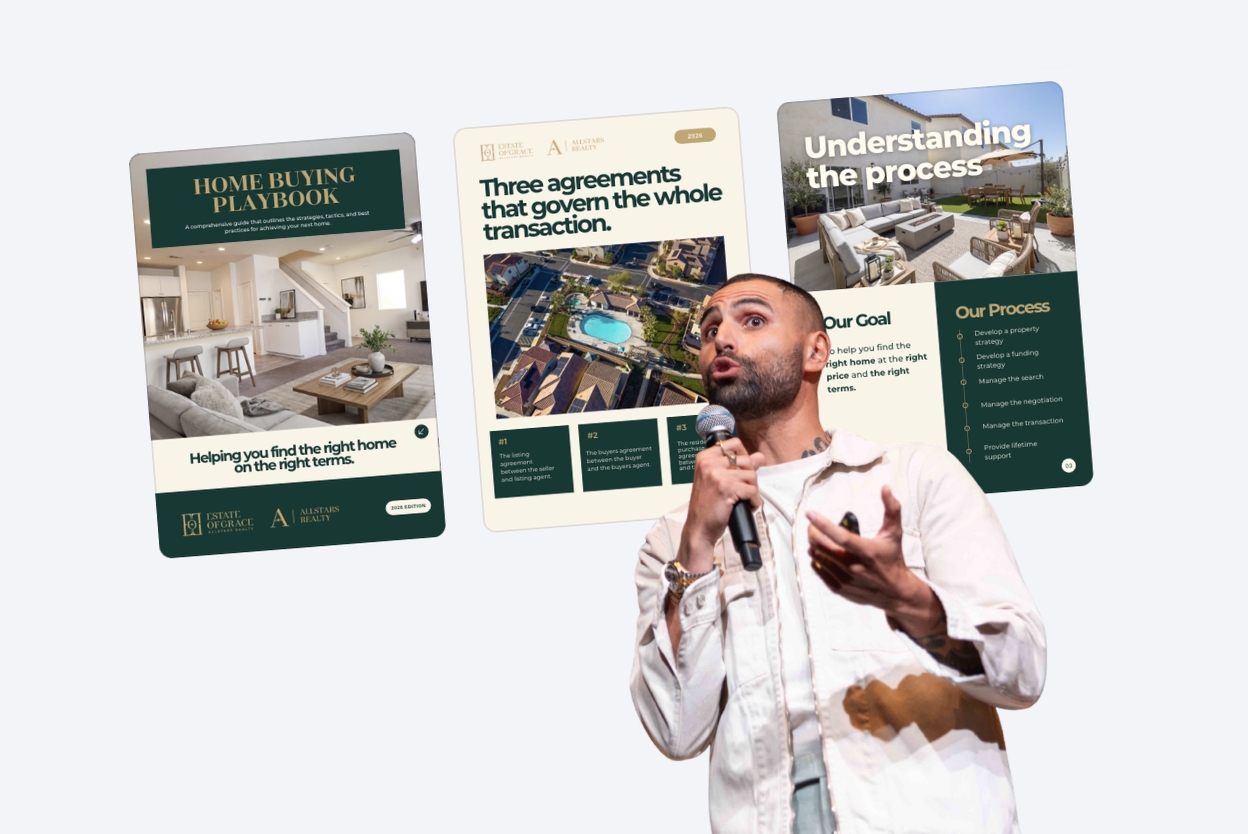
Instead of relying on conversations alone, I built a homebuyer guide, which you can download and customize in BAMx, that I use during every buyer consult and then send to clients right after. It gives them a clear roadmap they can come back to whenever questions pop up.
And it’s made a bigger difference than I expected.
This isn’t about having a pretty PDF. It’s about giving buyers clarity, structure, and language they can hold onto when things start moving fast.
Here’s how the guide is structured and why each piece matters.
Be Upfront About Agreements
With buyer agreements and transparency a critical part of the process, the guide starts with a simple explanation of the three agreements that take place within every transaction:
- The listing agreement between the seller and the listing agent.
- The buyer agreement between the buyer and the buyer’s agent.
- The residential purchase agreement between the buyer and the sellers.
You can take it even further and lay out all three agreements during your appointment, like Sharran Srivatsaa does. This ensures that buyers know how they are represented during the transaction.
Start With One Goal
Before we get into timelines, tours, or pre-approvals, the guide establishes a simple goal:
“To help you find the right home at the right price and the right terms.”
Most buyers think the goal is just “get a house,” or, in some cases, to “get a dream house.”
But when buyers understand that price and terms matter just as much as the property itself, their expectations shift immediately. They start thinking strategically instead of emotionally.
That framing alone changes the quality of every conversation that follows.
Clarifying the Process Removes Anxiety
One of the first pages in the guide breaks down the full process in clear steps: property strategy, funding strategy, search, negotiation, transaction, and long-term support.
Nothing complicated. Just the roadmap.
Buyers don’t need a lecture. They need orientation.
When they can see the entire path laid out, they relax. They stop wondering what’s coming next and start focusing on decisions instead of guessing.
The guide gives them something they can revisit later, which is huge. Most buyers won’t remember everything from a consult, especially if they’re nervous. Having a reference point keeps everyone aligned.
Strategy Before Showings
This is where the guide really starts to separate you from every other agent.
Instead of jumping straight into tours, the first real section focuses on building a property strategy.
Goals & Timeline. Location. Lifestyle. Non-negotiables.
When buyers go through this exercise in a structured way, they start thinking more clearly about what they actually want. It also gives you a deeper understanding of how to guide them.
And when that happens, you’re not just opening doors. You’re building a strategy.
Funding Strategy
Most buyers think getting pre-approved is a box to check. In the guide, it’s framed as a full funding strategy.
That includes:
- maximizing buying power
- exploring programs and incentives
- understanding boundaries
- aligning financing with long-term goals
When buyers see that level of preparation, they feel taken care of. It also reduces surprises later in the process, which is where most deals fall apart emotionally.
The more prepared they are financially, the more confident they feel when it’s time to write.
Showing How You Actually Find Homes
One of the most impactful sections explains the different ways we search for properties.
Not just the MLS.
Network opportunities.Off-market outreach.Coming-soon inventory.
Technology tools like Mosaik that help analyze and surface opportunities faster.
When buyers realize how much work goes into finding the right property, they start to understand the value of having an agent who operates strategically instead of passively.
It reinforces that you’re not just waiting for listings to hit their inbox.
You’re actively sourcing opportunities.
Teaching Buyers How the Market Actually Works
Another section breaks down market dynamics in simple terms: inventory, days on market, list-to-sale ratios, pending activity.
Nothing overly technical. Just enough context to help buyers understand what’s happening around them.
This matters because buyers make better decisions when they understand the environment they’re operating in. Instead of reacting emotionally, they can move with more confidence and less hesitation.
Clarity reduces panic.
Explaining Offer Strategy in Plain Language
When it’s time to write an offer, most buyers suddenly feel overwhelmed.
Price. Contingencies. Deposits. Timelines. Repairs. Credits.
If this is the first time they’re hearing about these things, they’re going to feel uncertain, even if they trust you.
The guide introduces these concepts early and in plain language. It shows that an offer isn’t just about price. It’s about structure and terms that help win the right house without putting the buyer in a risky position.
By the time they’re ready to write, nothing feels unfamiliar.
What Happens After the Offer Gets Accepted
This is another area where buyers tend to feel lost.
Once an offer is accepted, they assume the hard part is over. In reality, that’s when coordination, deadlines, and details matter most.
The guide outlines what happens during escrow, inspections, financing, and closing so buyers know what to expect. It also highlights the team and tools supporting them through the process.
That level of transparency builds trust. Buyers feel like they’re in capable hands instead of wondering what’s happening behind the scenes.
The Part Most Agents Skip: Lifetime Support
The final section of the guide talks about what happens after closing.
Market updates. Equity tracking. Vendor recommendations. Future planning.
This shifts the relationship from transactional to long-term. Buyers don’t feel like they’re being handed off once keys are delivered. They feel like they have an advisor.
That positioning matters more than ever in today’s market.
Why This Guide Works
At the end of the day, this isn’t about a document.It’s about consistency.
Every buyer hears the same clear explanation.Every buyer gets the same roadmap.Every buyer knows what to expect.
That consistency builds trust faster than any script or presentation ever could.
It also makes your consults stronger. You’re not trying to remember what to say. You’re guiding buyers through a process you’ve already thought through and structured intentionally.
And when buyers feel clarity, they move forward with more confidence.
If you want to use the exact framework and template I use, it’s ready for you inside the BAMx Skool Community. There’s a 7-day free trial, so if you want to grab it, use it with your buyers, and decide later, that’s completely fine.
If nothing else, take the concept and build your own version.